Agroforestry Systems Design
Design the
Forest
That Feeds.
System design · Species selection · Yield modeling. We layer macadamia over coffee over pasture until a single hectare earns like five.
System Design
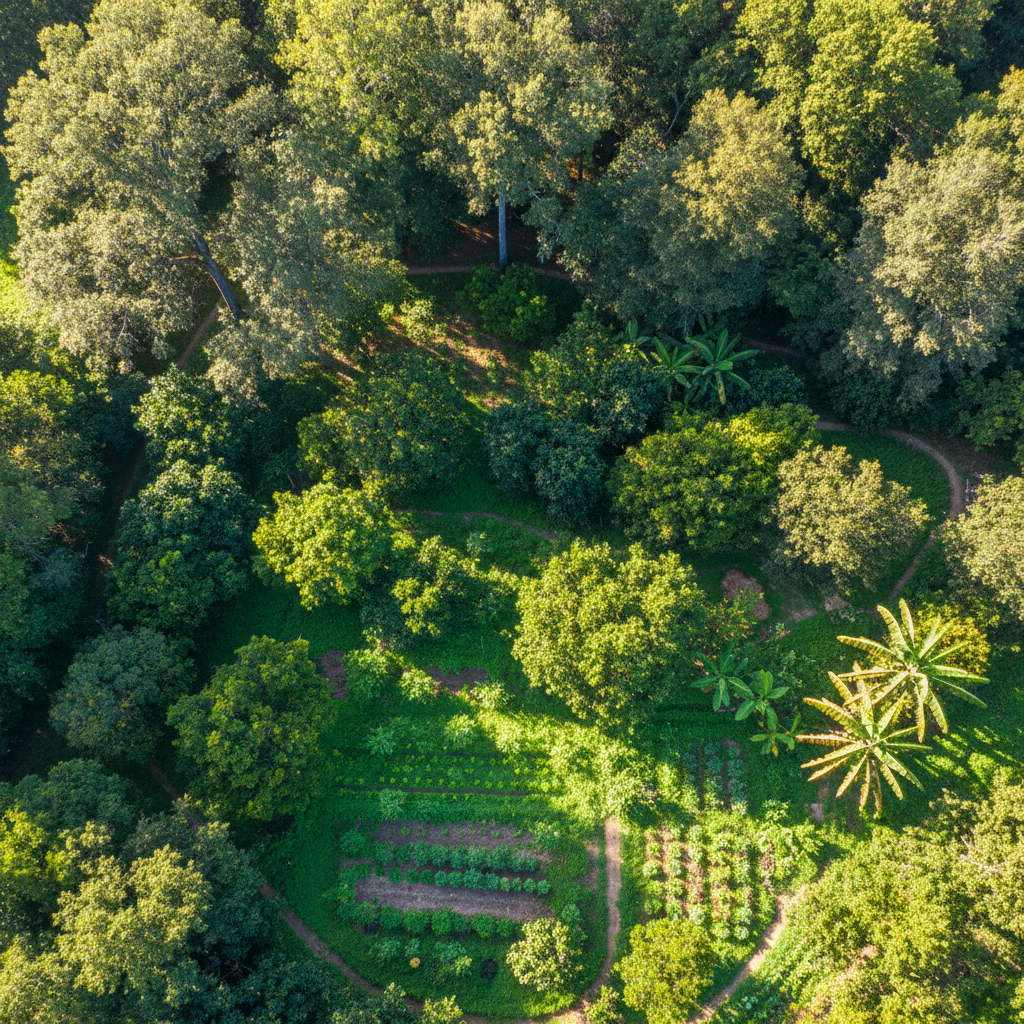
Full-farm layout integrating canopy tiers, root architectures, and livestock corridors into a single regenerative blueprint.
Species Selection
Site-matched polyculture palettes — timber, fruit, nitrogen-fixers, and cover crops tuned to your soil, rainfall, and market.
Yield Modeling
Ten-year income projections by species layer, with sensitivity analysis for climate variance and commodity price swings.
Emergent Tier — Completed Systems
Forests
Already Growing.
Click any project to open the full species palette, income projections, and time-to-harvest breakdown.
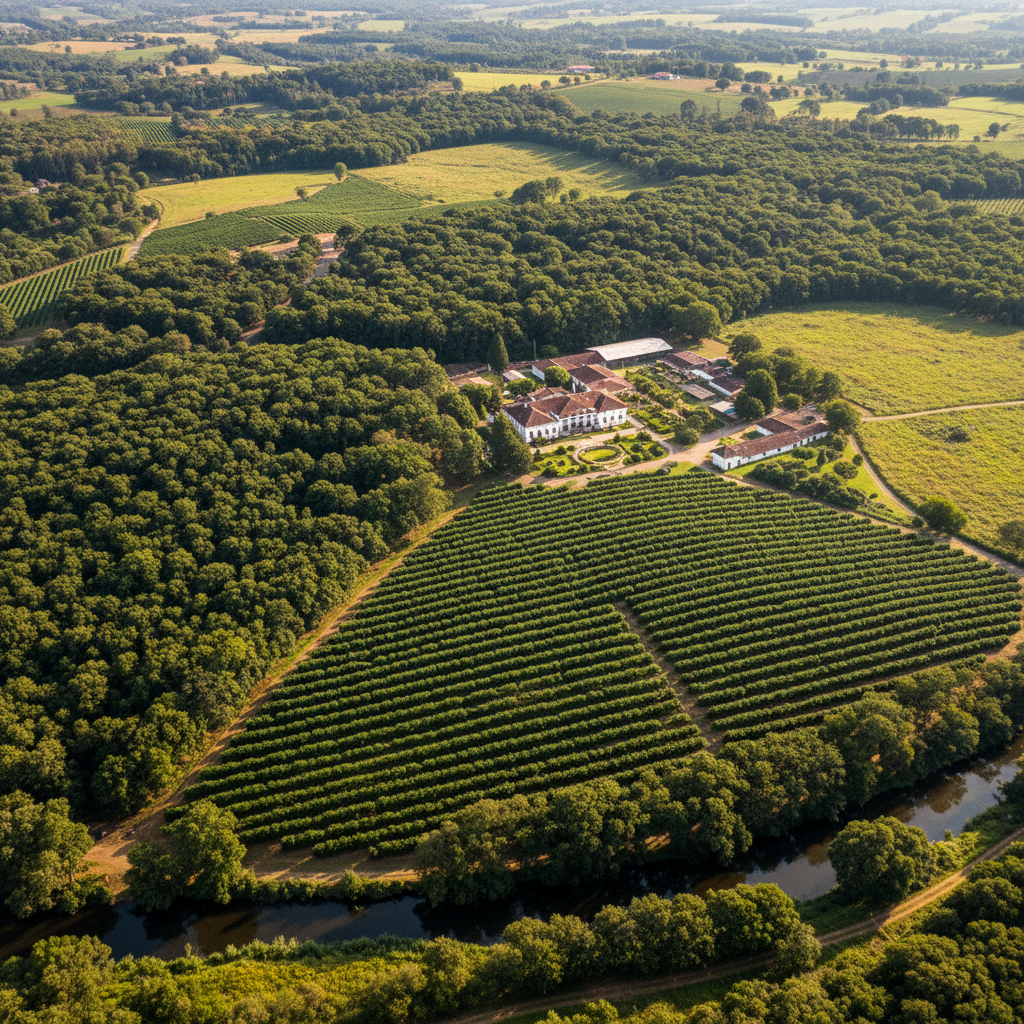
Serra Verde Estate
Minas Gerais, Brazil · 42 ha
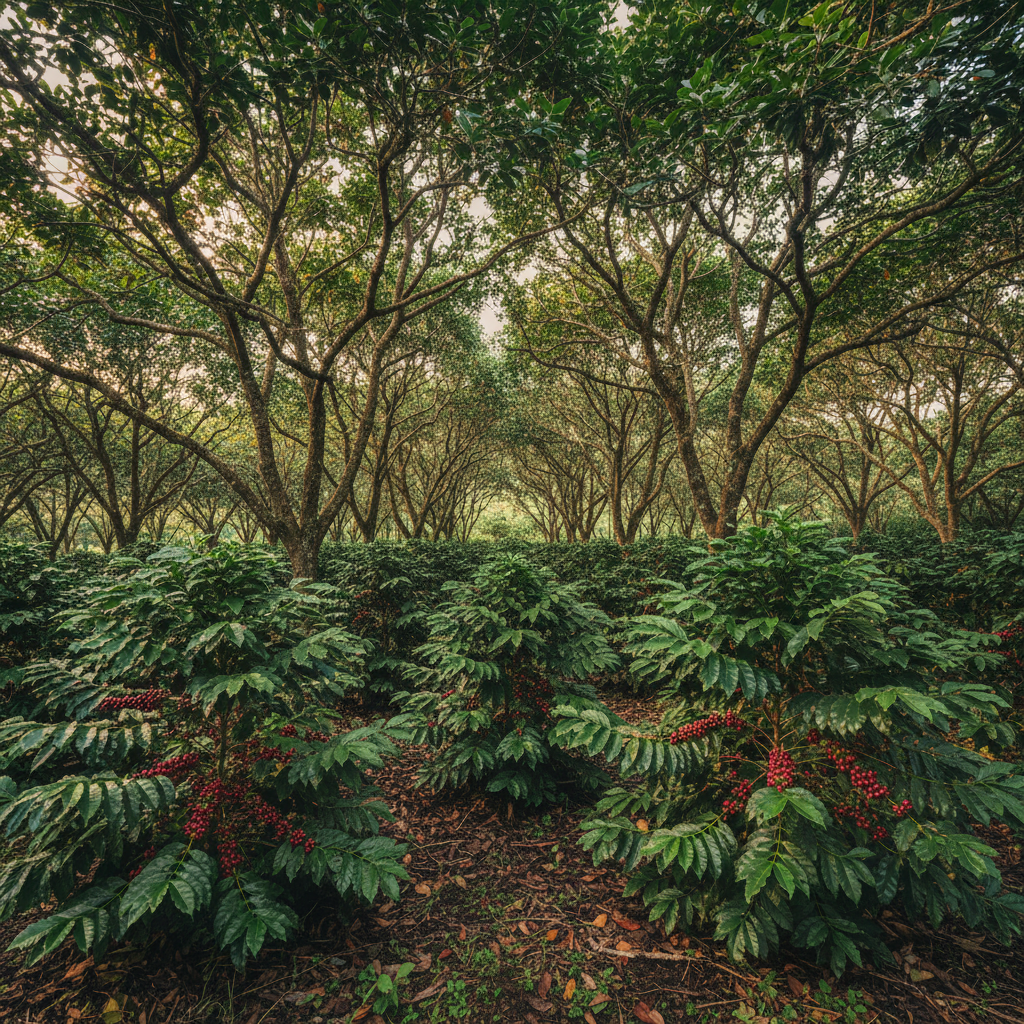
Converted 42 ha of degraded cattle pasture in the Cerrado transition zone. Macadamia canopy provides 60% shade for specialty-grade arabica; leucaena fixes 180 kg N/ha/yr eliminating synthetic inputs.
4.8×
Income Multiplier
18 months
First Harvest
$89,200
Year 5 Revenue
Species Palette
Macadamia integrifolia
Emergent
Coffea arabica
Mid-story
Leucaena leucocephala
Nitrogen-fixer
Brachiaria brizantha
Ground cover
Year 1: $18,400
Year 5: $89,200
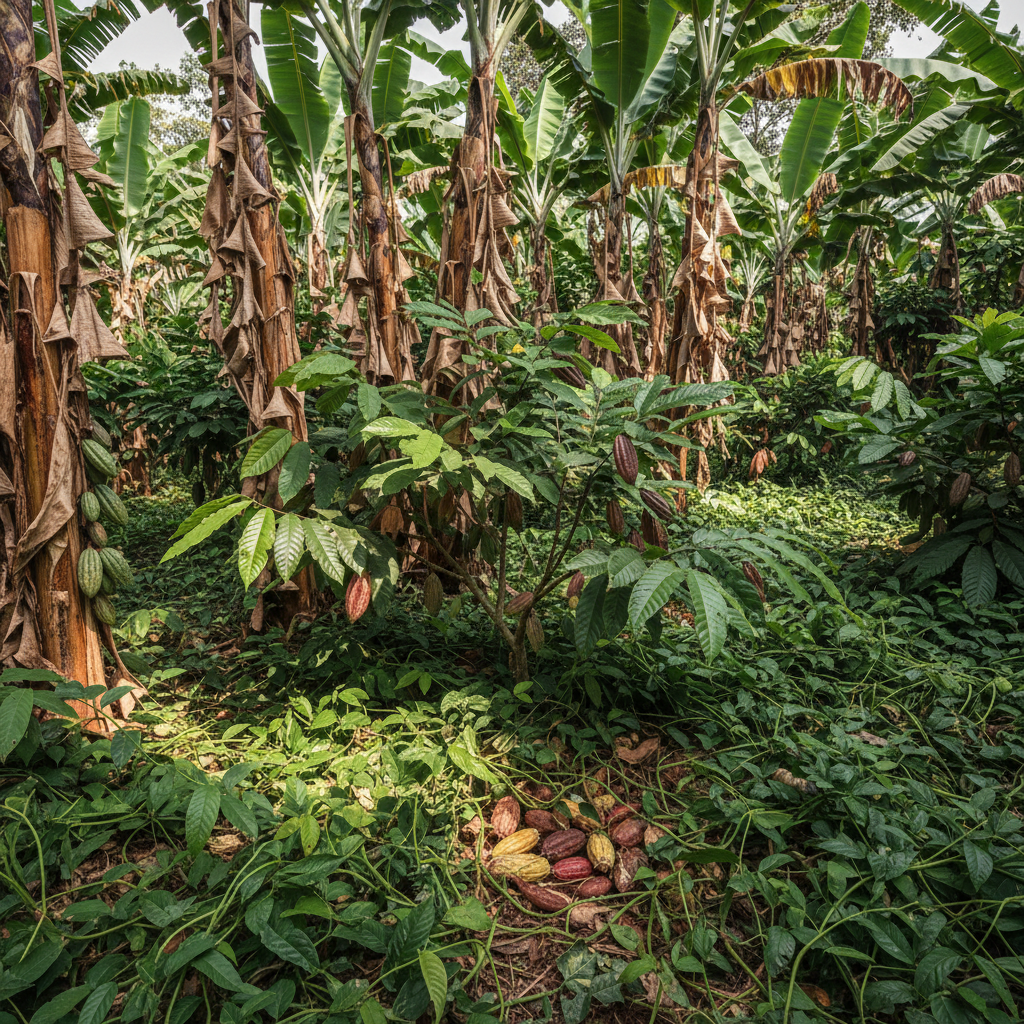
Kipawa Cooperative
Kilimanjaro, Tanzania · 8 ha
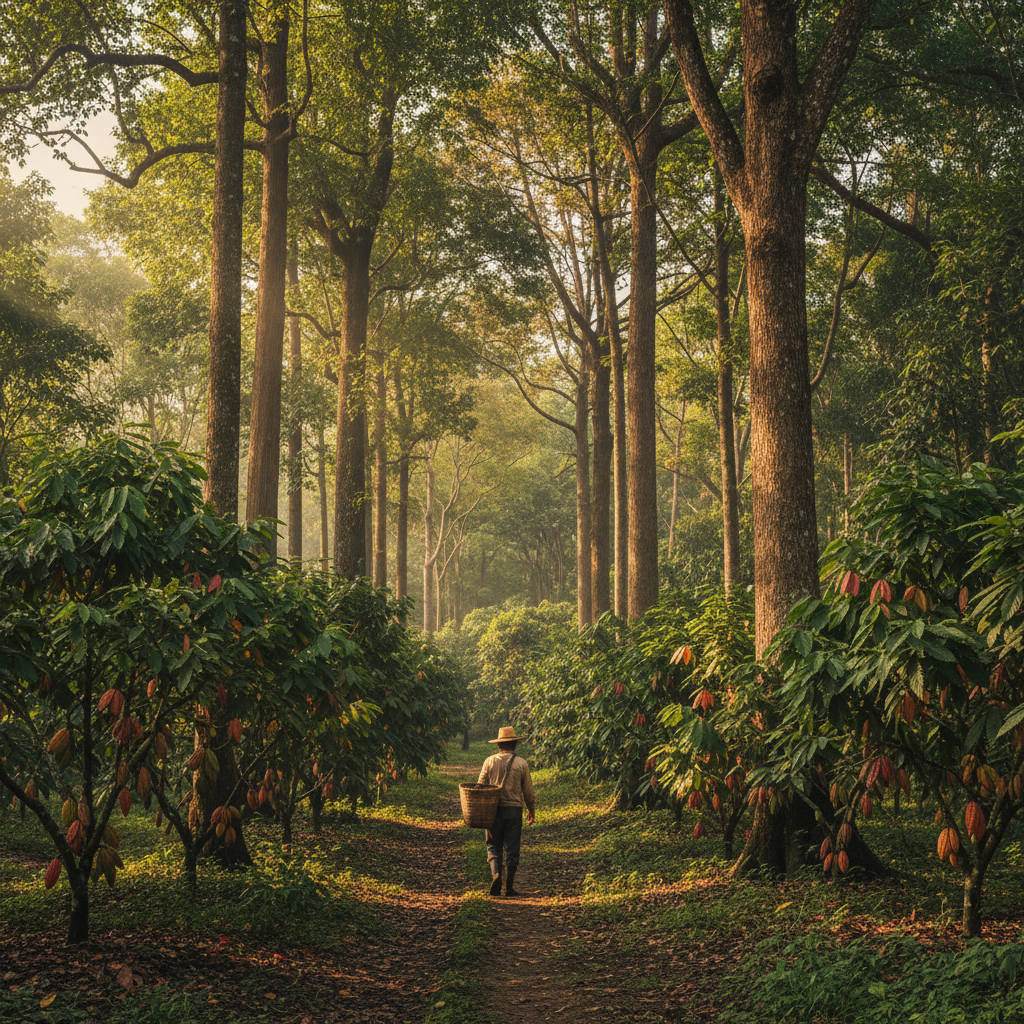
22-family cooperative converting mono-crop maize plots. Banana provides early cash flow while cacao matures; yam income bridges the gap. Climate-resilient stack tested through two La Niña seasons.
5.2×
Income Multiplier
8 months
First Harvest
$21,300
Year 5 Revenue
Species Palette
Musa acuminata
Emergent
Theobroma cacao
Mid-story
Dioscorea rotundata
Underground
Mucuna pruriens
Ground cover
Year 1: $4,100
Year 5: $21,300
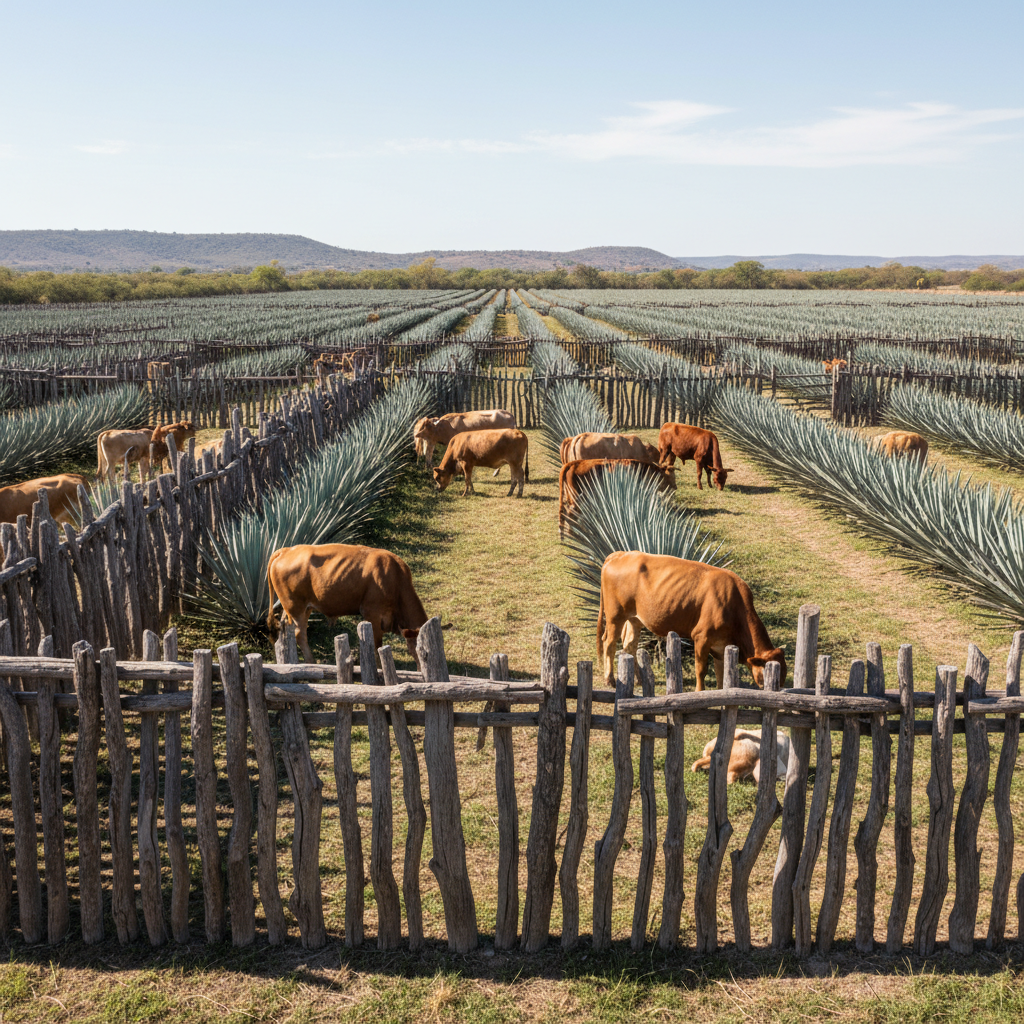
Ranchero Nuevo
Oaxaca, Mexico · 120 ha
Rancher converting overgrazed semi-arid hillside. Cedar windbreaks reduce soil erosion by 78%; agave provides drought-resilient cash crop while cattle rotate through silvopasture corridors at reduced stocking density.
3.9×
Income Multiplier
24 months
First Harvest
$198,000
Year 5 Revenue
Species Palette
Cedrela odorata
Emergent timber
Agave tequilana
Mid-story
Panicum maximum
Pasture
Gliricidia sepium
Windbreak
Year 1: $41,000
Year 5: $198,000
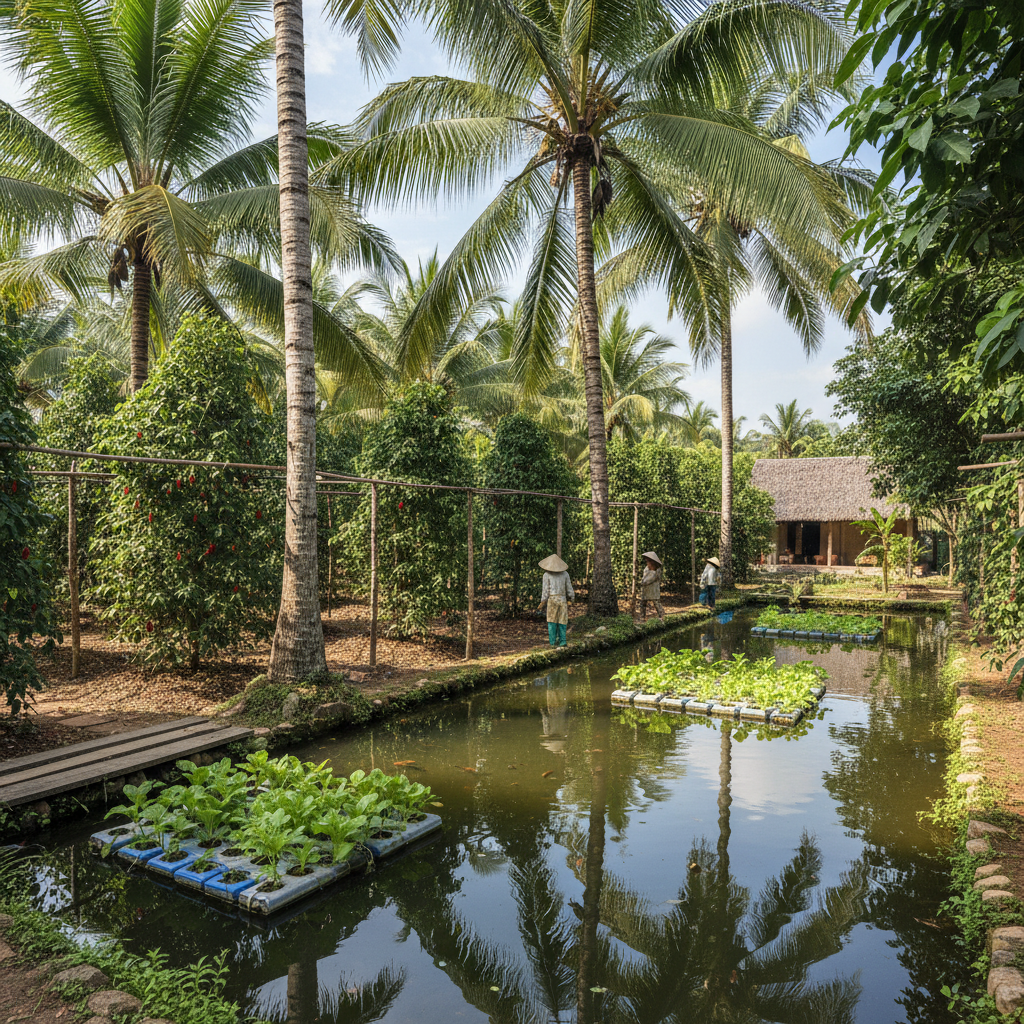
Mekong Delta Plot
Cần Thơ, Vietnam · 15 ha
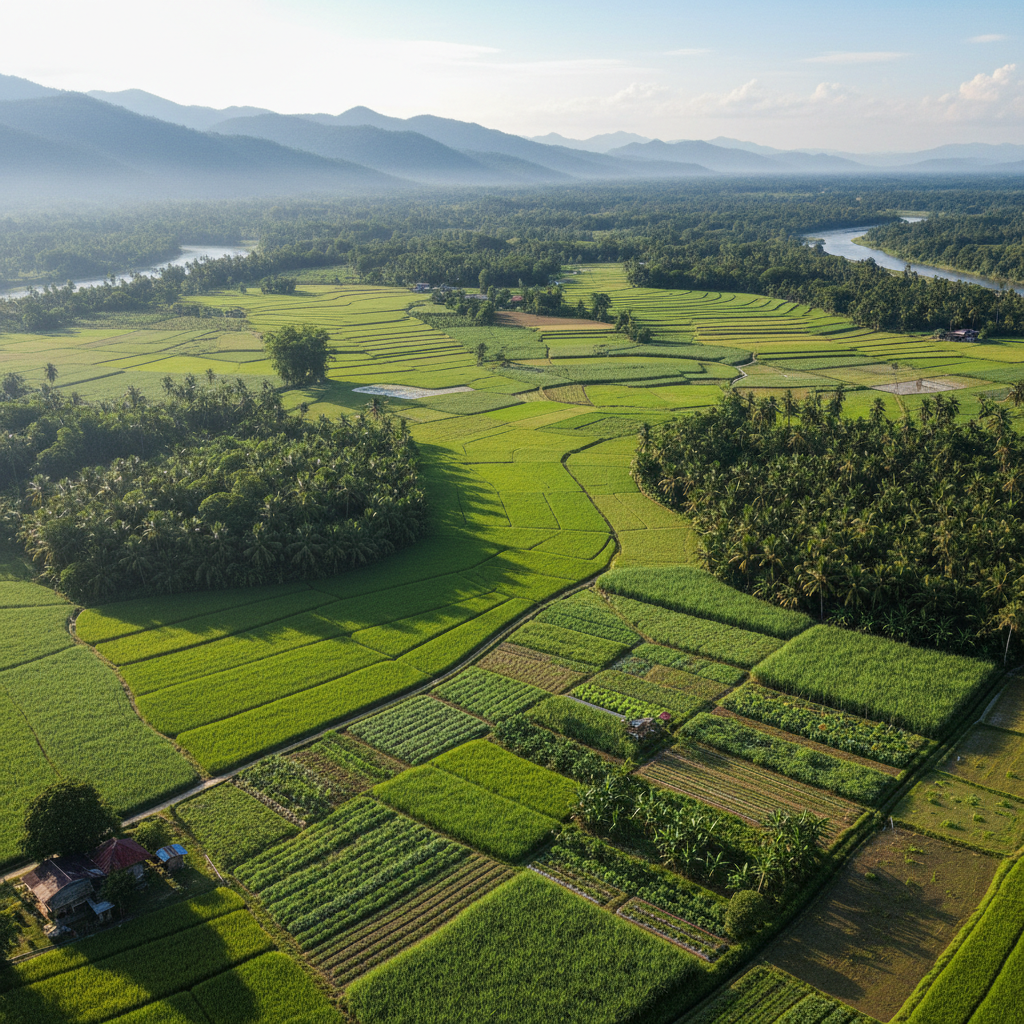
Integrated land-water system in the delta floodplain. Coconut fronds shade fish ponds reducing evaporation 40%; pepper climbs coconut trunks eliminating trellis cost; water spinach harvested weekly from pond margins.
6.1×
Income Multiplier
6 months
First Harvest
$59,700
Year 5 Revenue
Species Palette
Cocos nucifera
Emergent
Piper nigrum
Climbing vine
Pangasius bocourti
Aquatic
Ipomoea aquatica
Water surface
Year 1: $9,800
Year 5: $59,700
Free Resource
Species Stacking Guide — 47 polyculture combinations for 12 climate zones.
Mid-Story — System Architecture
Every Layer
Has a Role.
A well-designed agroforestry system is an architectural cross-section. Each tier occupies a distinct light, root, and income niche.
Canopy Timber
Emergent — 15–25m
Long-term capital asset. Provides structural shade, windbreak, carbon sequestration.
Root depth: 4–8m
Fruit & Nut Trees
Sub-canopy — 6–12m
Medium-term income. Fills the canopy gap between timber and coffee, produces annually once established.
Root depth: 2–4m
Shade Crops
Mid-story — 2–5m
Core cash crop. Thrives at 30–50% shade; flavour complexity and yield quality increase under partial canopy.
Root depth: 0.8–1.5m
Nitrogen-Fixers & Spices
Shrub layer — 0.5–2m
Biological fertiliser. Fixes 120–200 kg N/ha/yr. Edible pods and rhizomes provide additional income.
Root depth: 0.4–0.8m
Living Mulch & Pasture
Ground cover — 0–0.5m
Soil protection and livestock feed. Prevents erosion, retains moisture, provides year-round grazing.
Root depth: 0.1–0.4m
Seasonal Harvest Calendar — Year-Round Income Distribution
Brachiaria (pasture)
Arabica Coffee
Macadamia
Cacao
Leucaena pods
Representative calendar for humid tropical zone (10°N–10°S). Actual timing varies ±4–6 weeks by elevation and microclimate.
Full Sun (80–100%)
Emergent tier. Pioneer species establishing canopy architecture.
Partial Shade (40–60%)
Ideal for premium commodity crops. Reduces temperature stress.
Deep Shade (10–30%)
Forest floor crops requiring minimal light. High value per kg.
Understory — Case Studies
Same Soil.
Different Story.
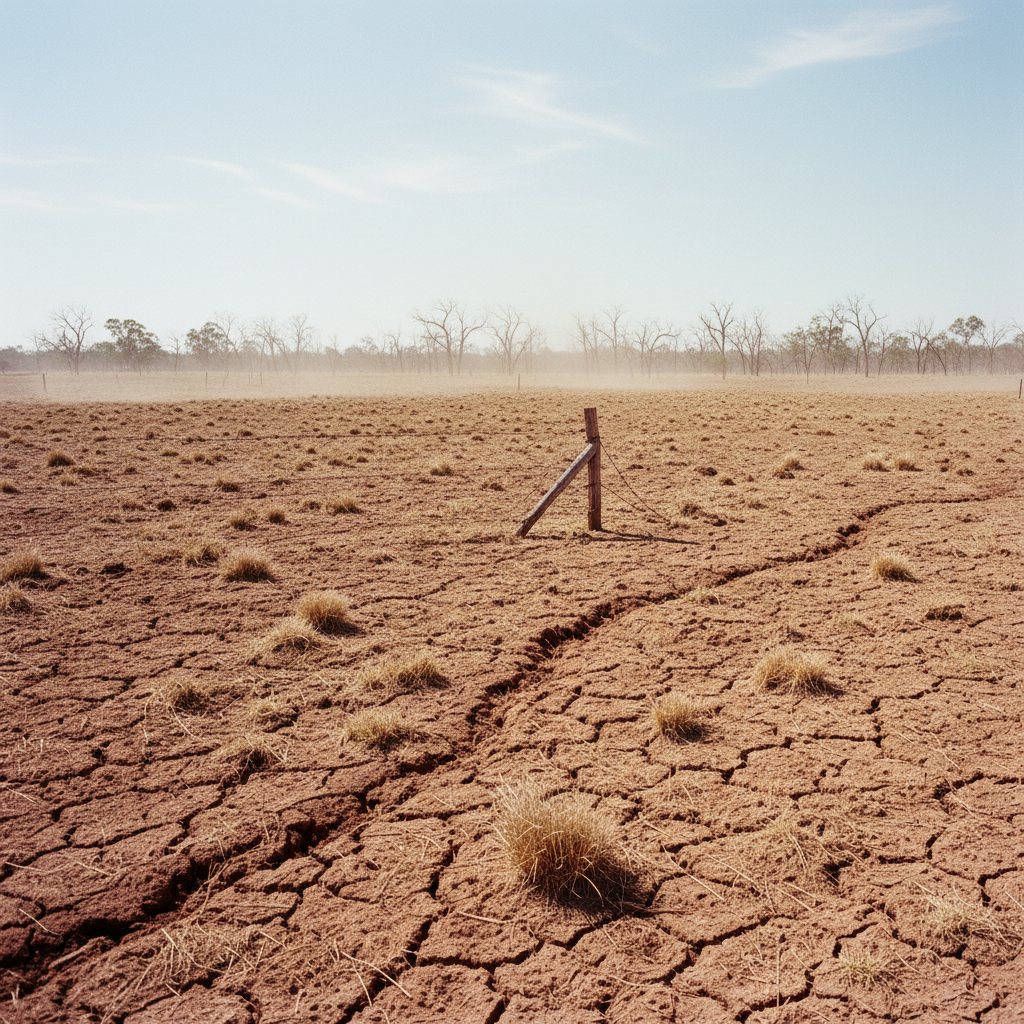
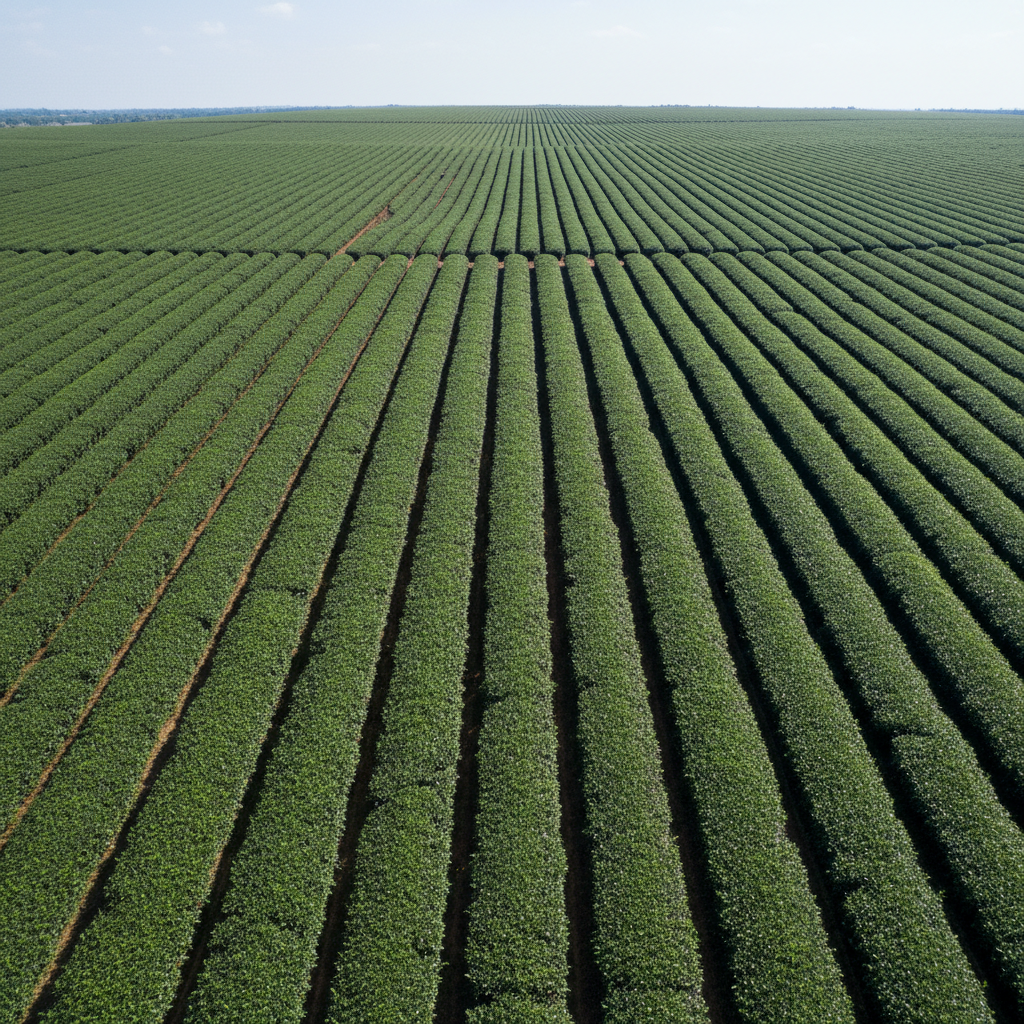
Drag the slider to compare before and after. Every site was degraded land before a Canopy system design.
Regenerative Rancher
Thornberry Ranch
Chiapas, Mexico
Land productivity
Soil carbon
Annual revenue
"We were running 0.4 cattle per hectare on exhausted land. Canopy redesigned the whole property in layers. Three years later we carry the same cattle on 30% of the land — the rest grows coffee and macadamia."
James Thornberry
Owner, Thornberry Ranch
Smallholder Cooperative — 34 families
Nyamira Cooperative
Nyamira County, Kenya
Species count
Climate resilience
Cooperative income
"The feasibility study gave our impact investor the evidence they needed. Canopy modelled 12 scenarios. We chose the one that kept tea as the anchor and added Grevillea timber and banana borders. The climate-resilience data sealed the funding."
Grace Otieno
Chairperson, Nyamira Agroforestry Cooperative
Forest Floor — Resource Library
The Knowledge
Grows Free.
Enter your email to unlock the Species Stacking Guide — 47 polyculture combinations across 12 climate zones — plus a four-part email series on polyculture economics.
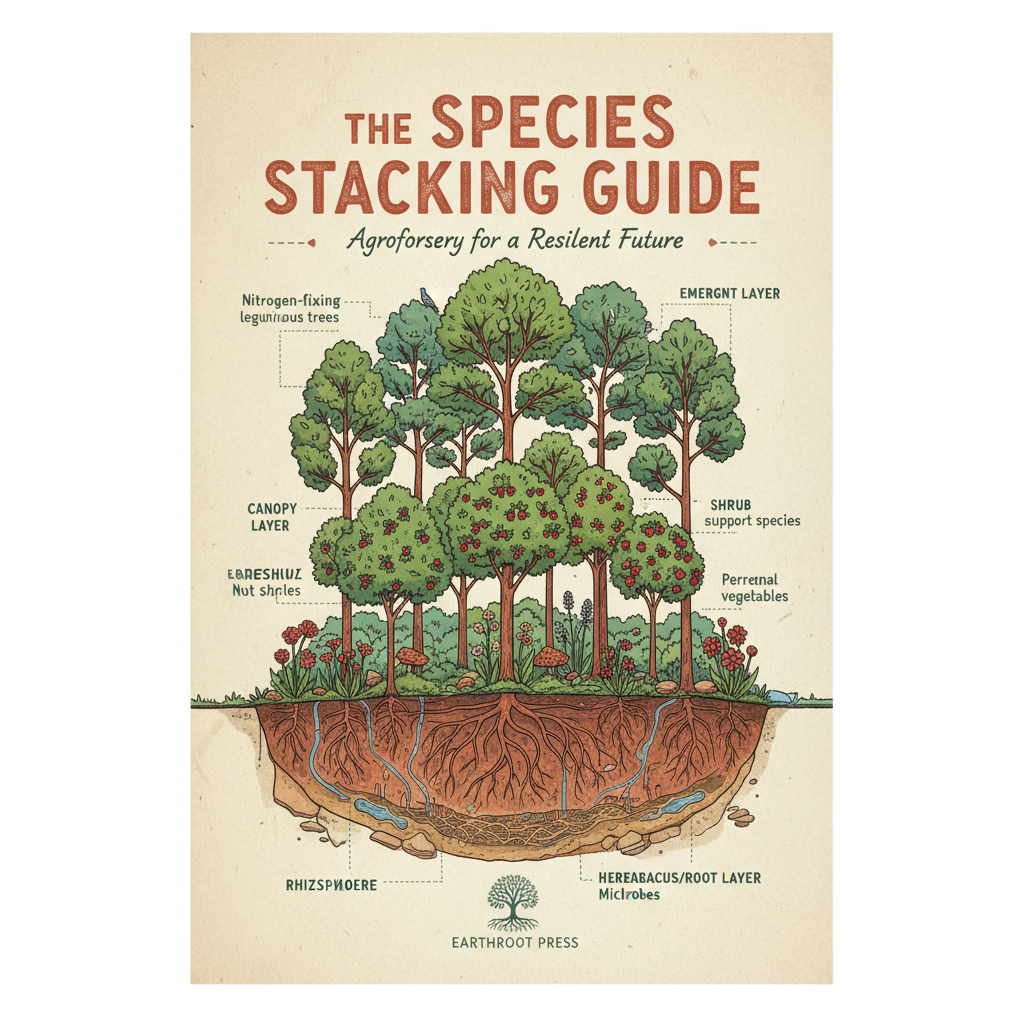
Species Stacking Guide
47 polyculture combinations · 12 climate zones · 68 pages
What's Inside
Species compatibility matrices by climate zone
Root architecture diagrams for 24 species
Income projection templates (Excel + PDF)
Soil preparation protocols by land type
Week 1: The Economics of Stacking
Why single-crop farms leave 60% of their land value on the table — and the math behind layered income.
Week 2: Reading Your Soil
Simple field tests that determine which species combinations will thrive on your specific land.
Week 3: Cash Flow in Year One
Which pioneer species generate income while your timber and fruit trees establish — and how to sequence planting.
Week 4: Pitching to Impact Capital
How to structure an agroforestry feasibility study that satisfies due diligence for climate-focused investors.
Ready to design your specific system?
Book a Site Assessment2-hour video call · Site analysis · Preliminary species recommendations included